MCAEL Welcomes Gerard J. P. Etienne as New Executive Director
April 16, 2025

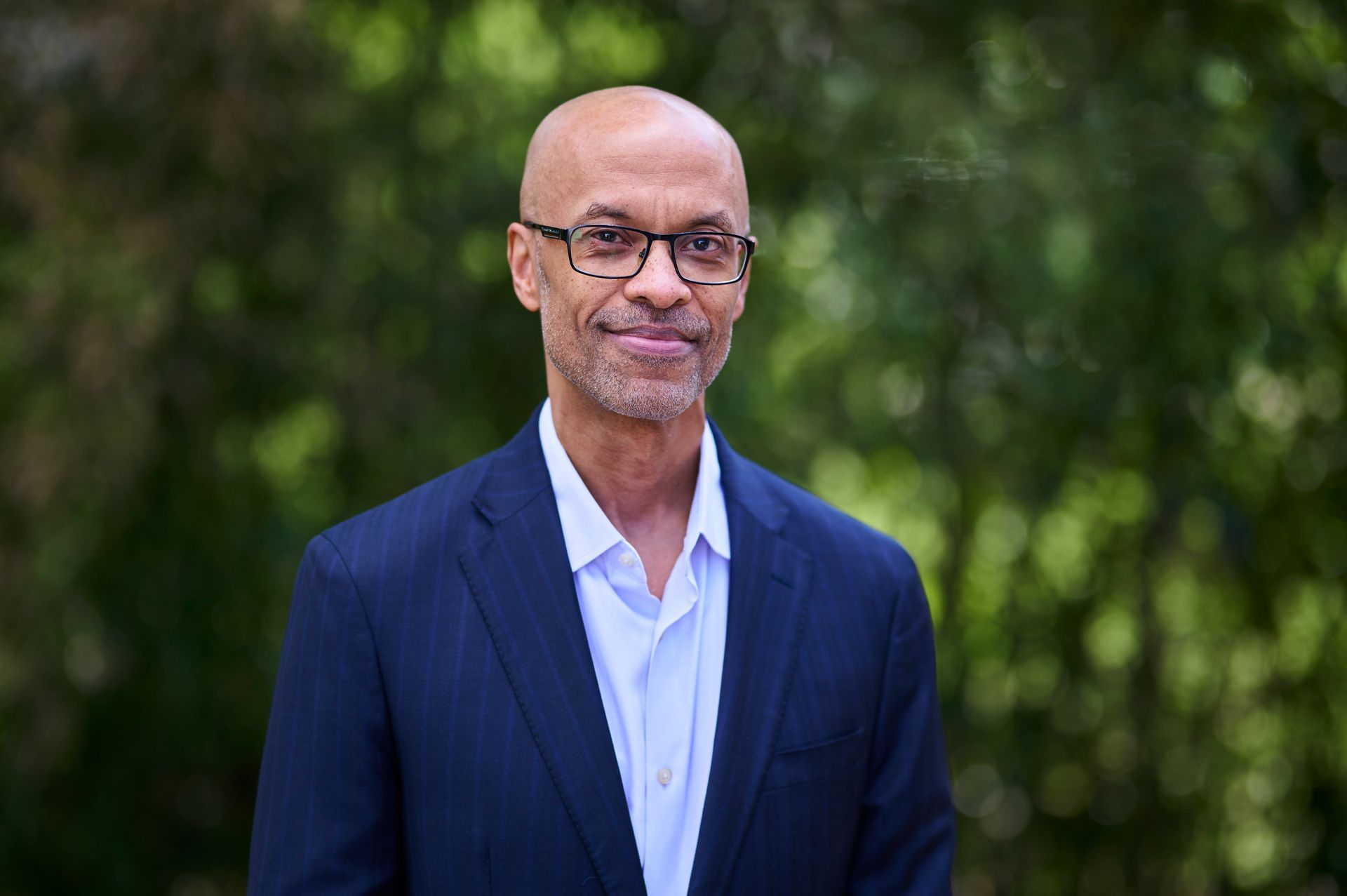
MCAEL is delighted to announce the appointment of Gerard J. P. Etienne as its new Executive Director. Gerard brings a depth of experience overseeing and growing large programs, most recently as Chief Program & Innovation Officer at the Jewish Council for the Aging (JCA). He will assume his new position at MCAEL on May 5, 2025.


Gerard began his career as a mechanical engineer and then a management consultant for both small and large companies, focusing on intrapreneurship and innovation. He discovered his passion for mission-driven work through years of volunteering – leading him to a position as Director of the Vocational Services Program (VSP) at Interfaith Works, where he worked directly with immigrant job seekers, including non-English speakers, to help them overcome cultural and employment barriers.


“Gerard brings a deep personal connection to MCAEL’s mission and a strong commitment to serving vulnerable and marginalized communities in Montgomery County,” said Sean Klein, MCAEL Board Chair. “His record of equity-centered leadership, along with his experience managing multidisciplinary teams and complex programs, make him the ideal choice to lead MCAEL into its next chapter.”


"I am thrilled and honored to serve as MCAEL'S next Executive Director,” Gerard stated. “As a long-time Montgomery County resident and someone with lived experience as an English learner, MCAEL'S mission is deeply personal to me. It's a privilege to give back to my community and to help expand opportunities for adult learners across our county."


Gerard’s family moved to the United States when he was a teenager, and he entered the American school system speaking no English. A Montgomery County resident for almost 40 years, Gerard and his wife raised two sons here. He and his wife are both avid fans of Arsenal Football Club (they never miss a game). They live in Silver Spring with their dog, Doug. 

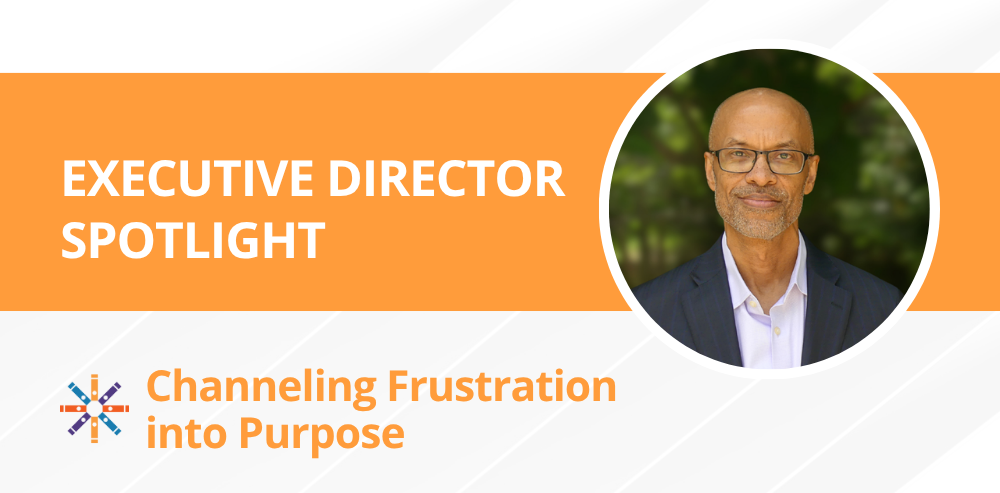
Graphic promoting an Executive Director Spotlight featuring Gerard Etienne and his recent blog.
By Gerard Etienne August 25, 2026
I don’t remember my first day of high school very well, or even my first day in college, but I will never forget my first day of 8th grade or how I felt. My family and I had just arrived in the U.S. in late July, and while I had taken a year of English in the French school system, the only sentence I could say with a degree of confidence was “I don’t speak English”! I was enrolled at St. Michael’s in Silver Spring (a K-8 school that closed in 2012), and on that first day, I went up to the teacher before class started and told him, “I don’t speak English.” He said something back to me, but I didn’t understand what he said, and I went to sit back down. For the rest of that day, and many days after that, I did my best to figure out what to do, where to be, and how to navigate my day-to-day. To do my homework, I first had to use an English-French dictionary to translate it, then switch to a French-English dictionary to translate my thoughts to English.  As difficult as that experience was, I realize that I was very lucky—I was young, I had a strong academic foundation, no financial responsibilities, no one to take care of, and I was immersed in English every day, all of which allowed me to learn the language relatively quickly. The situation for adults is very different. Many, if not most, have families to support, bills to pay, multiple responsibilities to manage, and have limited time to devote to taking English classes, all while navigating an increasingly challenging climate of immigration enforcement and economic uncertainty. Despite these challenges, thousands of adults across Montgomery County have the courage, perseverance, and determination to take classes year after year. They choose to invest in themselves even when doing so means fitting English around work schedules, childcare, transportation, and everything else life demands of them. I had the incredible advantage of being immersed in English every day and having most of my day devoted to learning. Most adults don’t have that luxury. As children go back to school this fall, it is worth remembering that thousands of adults are also heading to the classroom to improve their English, often after a full day of work or caring for their families. Their determination is remarkable and inspiring. We have the responsibility to make sure that every adult who wants to learn English have the opportunity, support, and access to do so.
By Gerard Etienne July 23, 2026
Over the past several months, I’ve found myself avoiding the news, not because I don’t care—quite the contrary—but because the sheer volume and constant stream of “bad” news can feel overwhelming. It’s easy to feel exhausted and frustrated by problems that seem far bigger than any one person can solve. When I’m in that place, I try to remind myself that the work that my team and I do every day, the work that the nonprofit community does in MoCo—which is fundamentally about helping others—is a way to combat the harmful impact of what we see happening in the news and in our community. I may not be able to solve every problem or change harmful policies, but I can choose how I respond. I can help a neighbor, donate my time, work for a cause, advocate for someone, or support my community. Those actions may seem small, but I know for a fact that they can matter a great deal to the people receiving them. And I know they mean a great deal to me.  Helping others doesn’t solve everything, nor does it make the world’s problems disappear. But it can help to channel frustration into purpose. Even if we can’t control all that is happening, we can still have a positive impact on the people around us and on our community.
By MCAEL June 24, 2026
Last month, MCAEL sponsored three adult ESOL professionals from the coalition to attend the Maryland Association for Adult, Community and Continuing Education (MAACCE) 2026 Conference. Centered around the theme, Empowering Communities Through Education: Empowering People Where They Are, the conference brought together adult education professionals from across Maryland for workshops, resource sharing, networking, and professional learning. Anieta from Gaithersburg Beloved Community Initiative (GBCI) particularly enjoyed a session on scenario-based problem solving. The session "emphasized the importance of going beyond grammar and helping students become problem solvers—giving them opportunities to find their voice and advocate for themselves. This is something I am excited to continue building into my classroom." For Tanya from Identity, a standout session was Invisible Luggage: Leading with Emotional Intelligence, Not Emotional Weight. "The workshop emphasized that everyone—clients, teachers, staff—carries some form of emotional baggage, whether it’s a carry-on, a checked bag, or a whole conveyor belt. It began by prompting us to reflect on our own emotional “luggage” with the question: 'What emotional weight are you carrying right now, and has it been making decisions for you without your permission?' The concepts introduced shifted many participants’ perspectives.” Tanya appreciated the reminder that while learners and colleagues may share parts of their stories, much of what they carry remains unseen. The session reinforced the importance of approaching others with empathy and understanding.  MCAEL is grateful for opportunities to support adult ESOL professionals in accessing continuous professional development and bringing back new ideas, resources, and perspectives to their programs and the coalition.