Alina Ramirez Joyner Joins MCAEL’s Board of Directors
July 11, 2025

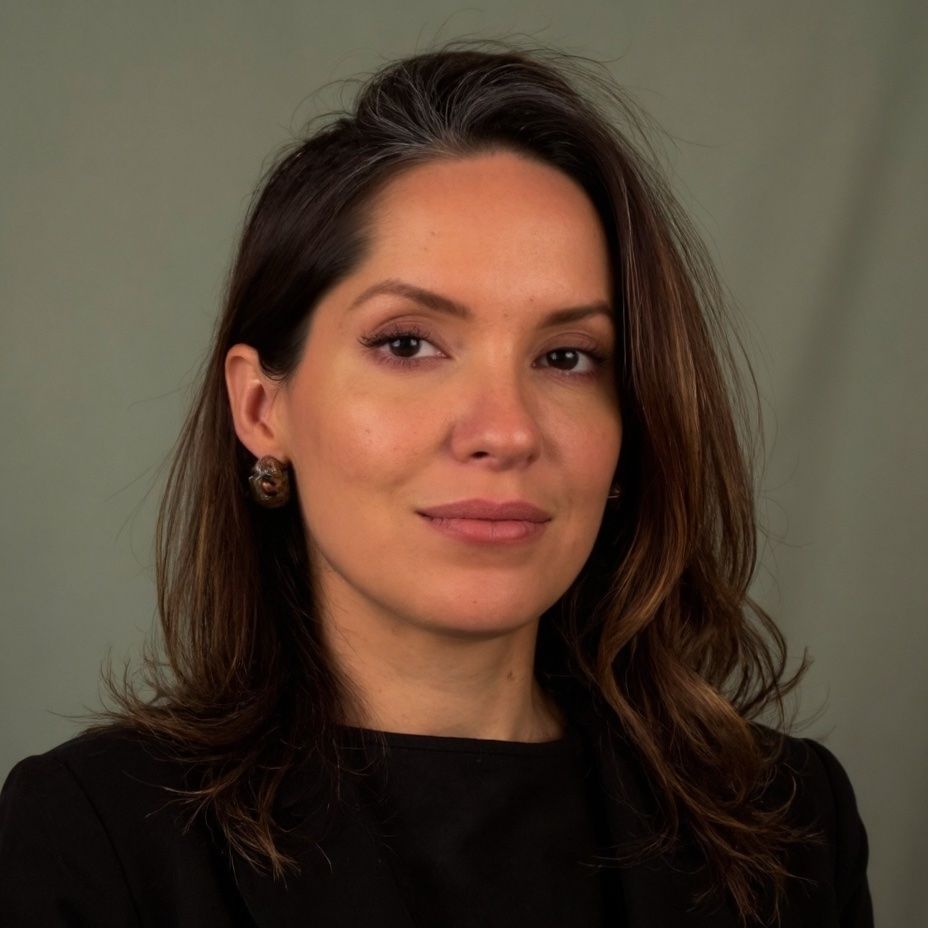
MCAEL is excited to welcome Alina Ramirez Joyner to the Board of Directors. Alina brings extensive experience as a consultant, advising senior leaders in government, private industry, and nonprofits on corporate social responsibility, community investment, and multicultural engagement strategies in both Mexico and the United States. She serves as Chair of Community and Inclusion in an educational setting, as a financial stewardship advisor, and as a civic community engagement coordinator in Bethesda, MD, where she leads initiatives to foster connection, transparency, and financial sustainability within local communities. 


Her professional path has included work with domestic and international organizations such as the Embassy of Mexico, the Washington, DC Mayor’s Office on Latino Affairs, CBS Radio, the Mexican Secretariat of Communications and Transportation, Mexico’s Electoral Institute, and various civic and local organizations. She's also collaborated with clients like National Geographic and leading healthcare systems including MedStar Health, Inova, and Adventist HealthCare.  


“As an immigrant myself, I understand both the challenges and the possibilities of navigating new systems—a perspective that fuels my dedication to advancing language access, inclusion, and fairness as essential tools for community growth and individual success,” said Alina, who is originally from Mexico City. “I integrate global strategy, risk management, and sustainable operations to design systemic solutions that empower individuals and strengthen communities, minimizing resource inefficiencies and accelerating social progress.


“Joining MCAEL’s Board is an exciting opportunity for me to help harness the transformative power of language to build connections, create a sense of belonging, and open doors for individuals and communities alike. I’m inspired by MCAEL’s mission and look forward to applying my experience in community engagement, fundraising, and cross-sector collaboration to help strengthen and sustain the organization’s impact.” 


Outside of work, Alina loves exploring art, history, and the outdoors, especially hiking with her family and their dog. 
By MCAEL June 24, 2026
Last month, MCAEL sponsored three adult ESOL professionals from the coalition to attend the Maryland Association for Adult, Community and Continuing Education (MAACCE) 2026 Conference. Centered around the theme, Empowering Communities Through Education: Empowering People Where They Are, the conference brought together adult education professionals from across Maryland for workshops, resource sharing, networking, and professional learning. Anieta from Gaithersburg Beloved Community Initiative (GBCI) particularly enjoyed a session on scenario-based problem solving. The session "emphasized the importance of going beyond grammar and helping students become problem solvers—giving them opportunities to find their voice and advocate for themselves. This is something I am excited to continue building into my classroom." For Tanya from Identity, a standout session was Invisible Luggage: Leading with Emotional Intelligence, Not Emotional Weight. "The workshop emphasized that everyone—clients, teachers, staff—carries some form of emotional baggage, whether it’s a carry-on, a checked bag, or a whole conveyor belt. It began by prompting us to reflect on our own emotional “luggage” with the question: 'What emotional weight are you carrying right now, and has it been making decisions for you without your permission?' The concepts introduced shifted many participants’ perspectives.” Tanya appreciated the reminder that while learners and colleagues may share parts of their stories, much of what they carry remains unseen. The session reinforced the importance of approaching others with empathy and understanding.  MCAEL is grateful for opportunities to support adult ESOL professionals in accessing continuous professional development and bringing back new ideas, resources, and perspectives to their programs and the coalition.
By Gerard Etienne June 24, 2026
It’s hard to believe that it’s been over a year since I arrived at MCAEL as Executive Director. Time has flown by in the best way possible — a sign that I’ve been fully invested in the work. I could write a 20-page essay on what I learned and observed this past year, but I won’t do that to you! Here are a few thoughts from year one: I’m happy to be past the initial learning curve! Starting any job with this level of responsibility can feel daunting and overwhelming at times. While there is no question I still have plenty to learn (I always will), I no longer feel like the “new guy". And that feels good. Managing a coalition of ESOL organizations can be challenging, particularly when needs can vary greatly from one organization to another. The upside is that our relationship with coalition partners is collaborative, constructive, and supportive. Everyone is working toward the same goal, even if the path sometimes looks different. One of my favorite parts of the job is attending community and coalition partner events, especially ESOL graduations. These events help me stay connected to the people behind our work. They also remind me of what it was like to arrive in this country not speaking English and how limiting that was. Every graduation is a reminder of why MCAEL’s mission matters and why we should never take it for granted. Thinking back to arriving in the United States without English, I still have moments when I can’t quite believe that I am leading an organization like MCAEL. My path here was anything but straightforward, and I feel a great deal of gratitude for every challenge, every opportunity, and all the people who helped me along the way. As I look forward to the coming year, I know I am in the right place doing work that is very meaningful to me and that I am proud of. The next fiscal year will undoubtedly bring more challenges, but with an exceptional staff, a supportive and engaged board of directors, and a cohesive coalition, we have a strong foundation to meet them.
By Emma Starr May 12, 2026
With the correct spelling of funambulism (noun: the act of walking on a rope between two points elevated from the ground), the Montgomery College Spelling Bee team secured the Honeybee Trophy at MCAEL's 11th Annual Grown-Up Spelling Bee.  The competition was robust, with all five teams demonstrating impressive spelling skills. Along with Montgomery College, this year’s team line-up included Burness, Bethesda Magazine, GBCC NextExecs, and the Rockville Chamber of Commerce. Even the audience proved their prowess, spelling zenzizenzizenzic (noun: a number to the eighth power) during the Audience Spell, with a group of four audience members winning the prize (once they chased down the Bee, who had taken off with it). The event was buzzing with energy and good spirits. At the reception, guests posed in the photo booth and enjoyed refreshments while donning antennae headbands and bee sunglasses. This year’s People, Power, and Potential Award went to two women who were once English language learners themselves. Bibi Mohamed is the force behind the English language program at ISWA (the Islamic Society of the Washington Area). As Program Director, Bibi goes above and beyond to remove learning barriers for women, including childcare, housing and food insecurity, and transportation. Likewise, Milagro Flores, the CEO, Founder, and Executive Director of Mujer Fuerza y Coraje, is focused on women. She started her organization 16 years ago, when she realized that many women were facing the same challenges as she was – “difficulties communicating, limited job opportunities, and a deep fear of speaking with their children’s teachers. Many of us were also afraid to visit the doctor because we could not fully understand what was being said. We felt frustrated, isolated, and, at times, invisible.” Milagro’s words remind us of why adult English language learning is so vital. “We aren’t just supporting English classes,” MCAEL Executive Director Gerard Etienne explained in his remarks at the Spelling Bee. “Learning English is essential to workforce development, economic stability, healthcare access, safety, community connections, equity, mental health, and so much more. So, when adults learn English, the impact extends far beyond the individual – it strengthens and benefits the entire community.