Executive Director's Blog: Not “Just” English Classes

June 17, 2025

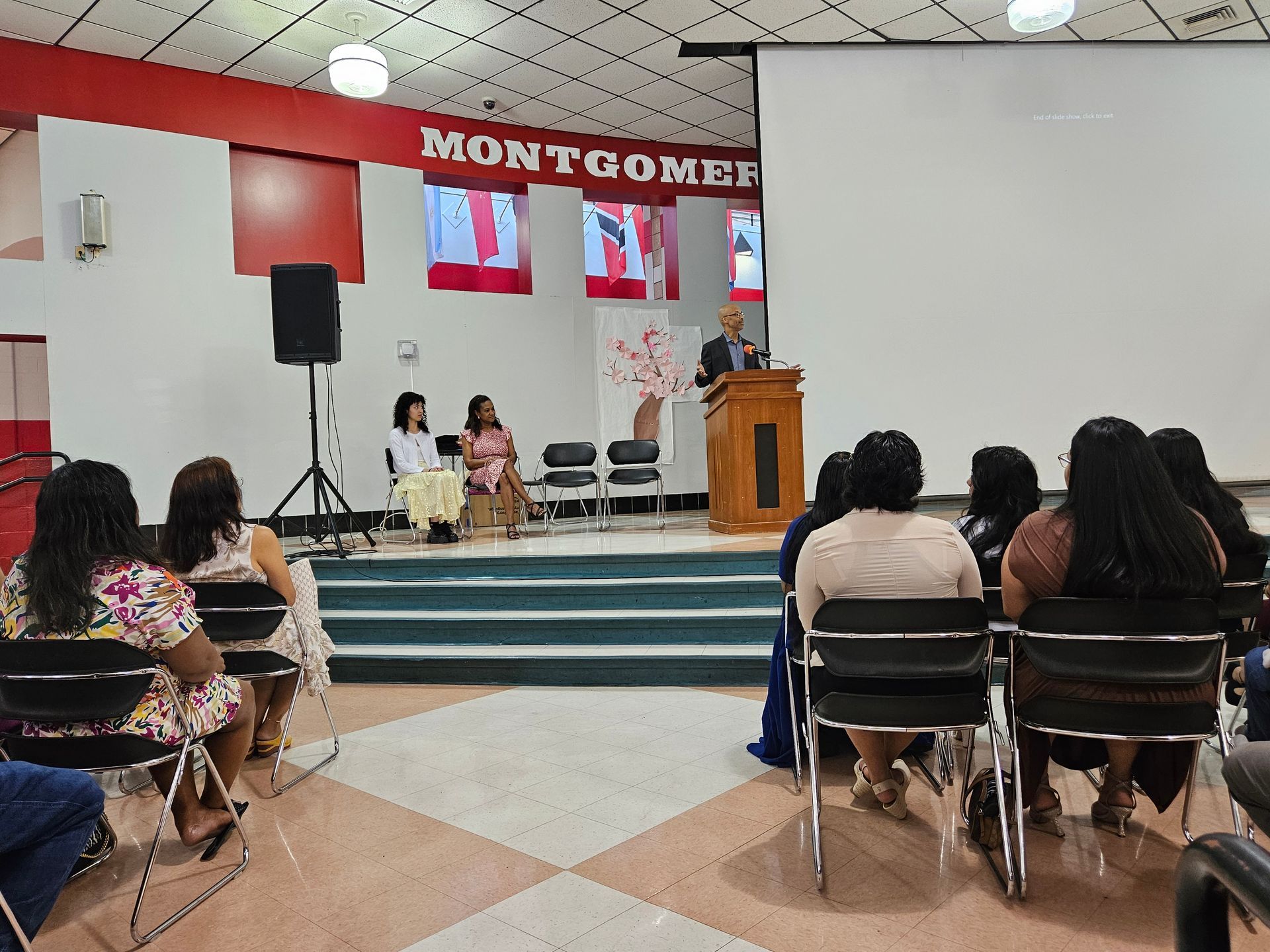
This past Saturday, I was invited to speak at the Jewish Social Service Agency (JSSA)’s Learning English Together graduation ceremony – and what a wonderful event it was! 


The first thing that surprised me was the number of people in attendance: there were over 320 attendees, of which 146 were proud graduates. Even more impressive is the fact that there were another 150 graduates who did not attend the ceremony! But what stood out even more was how important this ceremony clearly was to so many of the learners. As a guest speaker, I joined the entrance procession and lined up with the graduates. The pride and excitement were palpable, not just among the learners, but among the instructors as well. Almost everyone was dressed up for the occasion. This was the first clue that these weren’t “just” English classes to the graduates—this was a meaningful milestone, a real achievement. 


As the ceremony progressed and certificates were awarded, several learners gave speeches. I found myself nearly in tears as I listened to them describe what learning English had meant in their lives. It would be easy to reduce ESOL classes to simply language instruction for immigrants—but these classes are so much more than that. 


They are a gateway to connection, self-expression, better jobs, and more education. They foster belonging, friendships, relationships, and a kind of freedom that only language can provide. For many learners, these classes are truly life-changing, as many of the student speakers described. And the fact that these classes were so meaningful to them is a testament to the care and quality of instruction that JSSA and its instructors have provided. 


As each speaker shared their story, I thought back to my own English-learning journey. I could relate strongly to their experiences: the feeling of isolation, the frustration of not being able to say the simplest things, the fear of picking up the phone, the avoidance and anxiety around engaging with others. And the feeling of sometimes being reduced to “someone who doesn’t speak English” – as if that’s all there was to me. Learning English is a way out of those limitations. It gives learners the chance to grow, to build relationships, and to show who they really are. 


Congratulations to the graduates! 
By MCAEL February 5, 2026
Kavita Sethi joins MCAEL’s Board after a more than 30-year career in international development. She has extensive experience in developing and leading infrastructure projects in many regions of the world (Africa, Central Asia, Latin America and the Caribbean) with a focus on urban mobility, institutional change, governance and private participation in service provision. She brings a strong background in collaborating with government institutions, donor agencies, academia and infrastructure development companies across the world, as a transport professional with the World Bank. Post-retirement, Kavita is an active volunteer and board member for local and international non-profits and remains professionally active as an infrastructure and institutional development consultant. She is passionate about the role education plays in opening economic opportunities and empowering marginalized communities. MCAEL’s mission to promote access to language skills speaks directly to her passion for education and first-hand knowledge of the challenges of language barriers. She is excited to support MCAEL as they continue to deliver on their mission. Kavita holds a Ph.D. in Economics from Clark University and a Master's in Business Economics from the University of Delhi. She lives in Bethesda, Maryland, and is rediscovering the joys of hiking, reading, and photography. She is slowly improving her cooking skills and is always on the lookout for new recipes to try!
By MCAEL February 3, 2026
At MCAEL, our mission is rooted in strengthening our community by supporting adult English learners and the programs that serve them. In moments of heightened fear and uncertainty, it is important for us to speak clearly about our values and our commitment to the people we serve. Deeply troubling reports of immigration enforcement actions in Minnesota and elsewhere in the country have understandably raised serious concerns within immigrant and non-immigrant communities across the nation. So, it is understandable that many residents in Maryland, and Montgomery County specifically, might feel anxious about the possibility of increased immigration enforcement activity in our local area. This uncertainty creates fear, anxiety, and a sense of vulnerability that affects daily life, family stability, and willingness to seek education and community services. We see and feel the impact of this climate every day through our coalition partners, instructors, learners, volunteers, and within our own circle of friends and families. When immigrants are portrayed broadly and inaccurately as criminals or as a burden on public systems, the harm extends far beyond rhetoric. It can undermine trust, erode community well-being, and weaken the social fabric of our community. We must not let it. It is important to restate facts that are well established and supported by extensive research from reputable academic institutions, government agencies, and policy organizations across the ideological spectrum. Immigrants, including those without documentation, are consistently shown to commit less crime than U.S.-born citizens, to contribute billions of dollars in local, state, and federal taxes, and play a vital role in the workforce and small business creation. These findings are not matters of opinion - they are supported by decades of credible evidence. MCAEL supports policies and values that promote trust between communities and local institutions and are essential for public safety, public health, and educational access. We are grateful to live in a county that recognizes these principles and works to uphold them. MCAEL stands with our learners, our partners, our neighbors, our families, and our community. We affirm the right of every person to be treated with fairness, dignity, compassion, and respect regardless of immigration status, language skills, or ethnicity, and to feel safe in their own homes, neighborhoods, and in their daily lives. We remain committed to supporting adult learners and the programs that serve them, and to working alongside our partners to strengthen resilience, trust, and opportunity throughout Montgomery County.
By MCAEL January 29, 2026
MCAEL is delighted to welcome Fiona Glade to the Board of Directors. Currently interim dean of the Honors College at Montgomery College, Fiona started her career in higher education more than twenty years ago. Since joining the Montgomery College community six years ago, she has led the department of English Language for Academic Purposes, Communication Studies, and Linguistics; directed the Paul Peck Humanities Institute; and served as interim Campus Dean of Takoma Park/Silver Spring campus. She previously served as Assistant Provost at the University of Baltimore, and prior to that as Associate Professor and Vice Chair at the California State University, Sacramento, where she taught undergraduate composition and writing-in-the-disciplines courses as well as graduate courses in the theory and practice of composition, rhetoric, second language reading and writing, and pedagogy. A first-generation college student and immigrant to the United States, Fiona earned her A.A. in English from Antelope Valley Community College; her B.A. in English from the University of California at Santa Barbara; and her M.A. and her Ph.D., with distinction, in Rhetoric and Composition from Washington State University. Fiona believes passionately in the capacity of higher education to be transformative, and she remains fiercely committed to access, high quality, and affordability. She is proud to have spent her career serving students, faculty, and staff at public institutions, where her highest priority is to contribute to academic excellence and lifelong learning, and to support students’ achievement of the goals they have set for their own education pathways. She is excited to continue her work in this area, now as a member of the MCAEL Board. Fiona lives in Silver Spring with her husband, Walt, and their tiny chihuahua, Wilson. Outside of work, she enjoys reading, cooking, traveling, and volunteering.